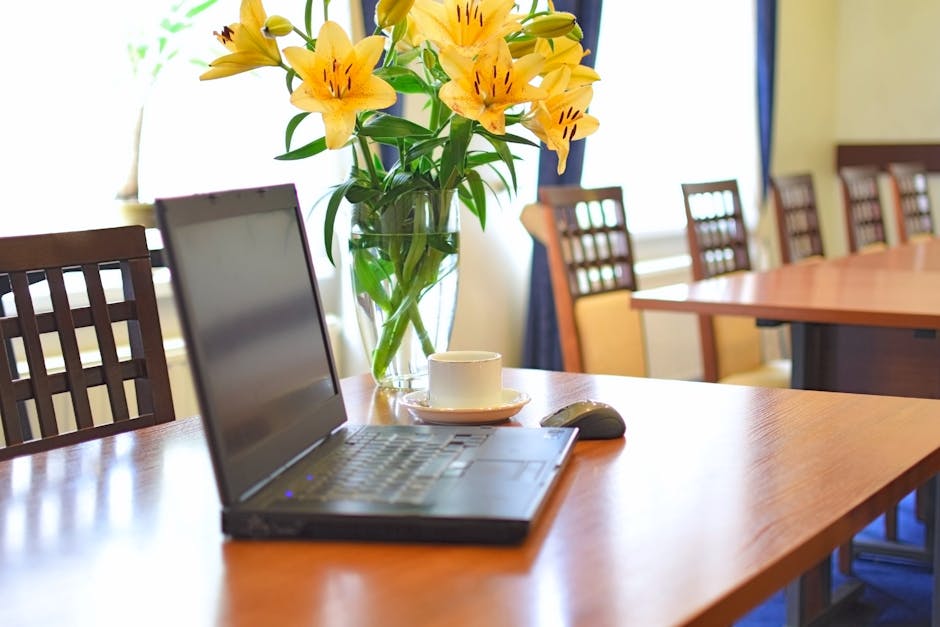
Office flowers for Barnes businesses on Castelnau
Posted on 10/10/2026
If you manage a reception desk, run a studio, or look after a small office near Castelnau, you already know how quickly a space can feel flat. A good arrangement changes that. Office flowers for Barnes businesses on Castelnau are not just decoration; they shape first impressions, soften a room, and make the day feel a little more considered. And to be fair, in a business setting, that matters more than people admit.
This guide walks through how office flowers work locally, what to choose, how often to refresh them, and what to avoid. You will also find practical tips for budgets, care, compliance, and decision-making, so you can choose something that looks good on Monday morning and still feels polished by Friday.
Whether you want a small vase arrangement for a front desk or a more structured corporate account for a multi-room workspace, the goal is the same: make the office feel welcoming without creating extra work for your team.
Table of Contents
- Why Office flowers for Barnes businesses on Castelnau Matters
- How Office flowers for Barnes businesses on Castelnau Works
- Key Benefits and Practical Advantages
- Who This Is For and When It Makes Sense
- Step-by-Step Guidance
- Expert Tips for Better Results
- Common Mistakes to Avoid
- Tools, Resources and Recommendations
- Law, Compliance, Standards, or Best Practice
- Options, Methods, or Comparison Table
- Case Study or Real-World Example
- Practical Checklist
- Conclusion
- Frequently Asked Questions
Why Office flowers for Barnes businesses on Castelnau Matters
Castelnau sits in a part of Barnes where businesses often care about presentation in a quiet, understated way. That is part of the charm. People notice the details. A tidy arrangement on a counter, a low vase in a meeting room, a brighter display in a waiting area; these things send a message before anyone has spoken a word.
Office flowers are especially useful in businesses that rely on trust and atmosphere. Think of professional services, design studios, small clinics, independent consultancies, property offices, and hospitality-led spaces. Flowers do a job that signage and branding cannot quite do. They soften hard edges, break up sterile interiors, and make the environment feel human.
There is also a practical side. Fresh flowers can help a reception feel less anonymous and a meeting room less severe. If clients are visiting in the morning, they see the space at its best. If staff are in the office all week, the room feels more liveable. Truth be told, that can make a real difference on a wet Tuesday when London is doing its usual grey thing.
For businesses on or near Castelnau, local relevance matters too. A florist who understands the area can better match delivery timing, access, and the pace of the local business community. That does not sound glamorous, but it saves hassle. And hassle is the enemy of good flowers.
Expert summary: office flowers work best when they are treated as part of the workplace environment, not as an occasional add-on. Choose arrangements that suit the brand, the room, and the level of care your team can realistically manage.
How Office flowers for Barnes businesses on Castelnau Works
The process is usually simpler than people expect. Most office flower services begin with a short discussion about the space, the style of the business, and how often you want flowers refreshed. From there, the florist can suggest seasonal arrangements, vase sizes, colour palettes, and delivery timings that fit the office routine.
In practical terms, it often works like this:
- You decide where the flowers will live: reception, boardroom, kitchen, client-facing area, or multiple rooms.
- You choose the style: formal, modern, relaxed, colourful, minimal, or branded to a degree.
- You set the refresh frequency: weekly, fortnightly, or as needed.
- The florist delivers and, if relevant, replaces or tops up the arrangement.
- You review what works and refine the look over time.
Some businesses prefer one-off deliveries for events or seasonal updates. Others want ongoing arrangements that stay consistent, with colours and vessels chosen to suit the office interior. That consistency is often underrated. People walk in and think, yes, this feels looked after.
If you need flowers for a busy professional setting, a service that can handle broader delivery and ordering options is often more useful than simply buying a nice bunch once in a while. A corporate-friendly route such as corporate accounts can make repeat ordering and invoicing much easier, especially if more than one person needs to approve purchases.
For businesses that just want reliable local supply, a page like florist Barnes SW13 gives a good sense of the local service area and what is available nearby. It is a straightforward starting point when you want something local without the fuss.
Key Benefits and Practical Advantages
There are obvious benefits, and then there are the ones people only notice after a few weeks.
The obvious ones are visual. Flowers brighten the room, add colour, and make the office look cared for. But the practical benefits go deeper than that.
- Better first impressions: Clients and visitors notice a well-kept reception immediately.
- Improved atmosphere: Flowers help soften harsh interiors and make shared spaces feel less cold.
- Brand support: Colours and styles can reflect your business personality without being overdone.
- Seasonal freshness: Swapping arrangements through the year keeps the office feeling current.
- Low-effort polish: A good florist does the heavy lifting, which saves admin time.
- Morale boost: Staff tend to respond well to spaces that feel cared for. Not magic, just human nature.
There is also a subtle client benefit. If you work in a relationship-led business, flowers can make meetings feel less transactional. A boardroom with a clean arrangement tends to feel more open and less stiff. It is a small thing, but small things stack up.
Another practical advantage is flexibility. Office flowers can be scaled to the room. A compact vase works for a desk or sideboard. A larger design can anchor a reception area. If the office gets a lot of natural light, a longer-lasting flower mix may be better. If the space is more shaded, sturdier varieties are usually the safer bet.
And yes, you can still keep it simple. Simple is often better. Simple done well, anyway.
Who This Is For and When It Makes Sense
Office flowers are not only for large firms with glossy foyers. In Barnes, they make sense for a fairly wide mix of businesses.
- Professional offices: law, finance, property, consulting, and accountancy teams that want a polished reception.
- Creative businesses: studios and agencies that use flowers as part of their visual identity.
- Medical or wellbeing settings: where a calm, reassuring atmosphere matters.
- Hospitality and customer-facing businesses: cafes, salons, showrooms, and boutique spaces.
- Home-based businesses with visitors: especially when you receive clients in a front room, garden office, or converted space.
It makes sense when the room feels a bit unfinished, when client visits are important, or when the business wants to signal care and attention. It also makes sense during seasonal periods: spring refreshes, festive updates, thank-you gestures, office openings, and milestone celebrations.
One useful test is this: if a visitor were sitting in the room for ten minutes, would flowers make the space feel more confident and inviting? If the answer is yes, you probably have your answer.
It may not be the right fit if the office has severe restrictions on fragrance, pollen, or maintenance. In those cases, the arrangement still may work, but the flower choices need to be more deliberate. No one wants a lovely display that gives the team a headache by lunch.
Step-by-Step Guidance
If you are planning office flowers for the first time, keep the process simple. Most of the best outcomes come from clear briefings rather than overthinking every stem.
1. Define the purpose
Decide what the flowers should do. Are they mainly for clients, staff, branding, or an event? A reception display is not the same as a boardroom arrangement, and a weekly refresh is not the same as a one-off celebration.
2. Measure the space
You do not need architectural drawings. Just note where the flowers will sit, how much room is available, and whether the arrangement should be visible from a distance or appreciated up close. A tall vase may look elegant, but if it blocks sightlines across a meeting table, it quickly becomes awkward.
3. Decide on colour and mood
Think about the office interior. Neutral spaces often benefit from fresh seasonal colour. A brighter office may look best with calmer tones, such as white, green, or softer mixed shades. If in doubt, keep the palette restrained. It is easier to add interest than to tone things down later.
4. Match flowers to maintenance levels
Some flowers last better than others. If your team is busy, ask for hardy arrangements that do not need constant fuss. A florist can usually suggest better options if the office is warm, air-conditioned, or partly shaded.
5. Choose a delivery rhythm
Weekly delivery keeps things consistently fresh. Fortnightly delivery can work for smaller offices or lower-traffic spaces. For events or client days, one-off delivery may be enough. The right rhythm depends on usage, budget, and the level of polish you want.
6. Review and refine
After one or two cycles, look at what is working. Are the flowers lasting as expected? Does the arrangement suit the room? Are you using the right colours? Small adjustments are usually enough. That is the nice part.
If you already know your team will want the process to be streamlined, it can help to choose a service that offers regular ordering and clear options. For day-to-day use, pages such as flower delivery Barnes SW13 and same-day flower delivery Barnes SW13 are useful reference points when timing matters and you need something flexible.
Expert Tips for Better Results
A good office arrangement is not just about choosing pretty flowers. It is about fit. Here is where a bit of judgement goes a long way.
- Keep fragrance under control: Strong scents can be distracting in enclosed offices. Subtle is safer.
- Use vessels that suit the workplace: Sturdy glass, ceramic, or low-profile containers tend to work better than delicate shapes in busy spaces.
- Think about height: Tall arrangements are impressive, but lower designs can be better for desks and meeting tables.
- Choose seasonal flowers: They usually look fresher and feel more natural than forcing out-of-season styles.
- Mix texture with restraint: A little variety is good, but too many competing elements can look messy fast.
- Plan for the room temperature: Warm rooms shorten vase life, so placement matters more than people realise.
- Ask for office-friendly stems: Flowers like lilies can be beautiful, but they are not always ideal in every workplace. Context matters.
One thing people often miss: the flowers should support the room, not compete with it. If the office is already busy visually, calmer arrangements usually work better. If the space is plain, you can afford something a touch more expressive.
Another small but useful tip is to rotate where the arrangement sits. Reception one week, meeting room the next, kitchen or break space after that. It keeps the office feeling refreshed without increasing spend. A tiny detail, yes, but those tiny details are what clients remember.

Common Mistakes to Avoid
Most mistakes with office flowers are easy to avoid once you know what to look for. The problem is that they often look fine on day one, then become slightly annoying by day three. That is usually when the reality shows up.
- Choosing purely by appearance: A beautiful bouquet that droops quickly is not great value in an office.
- Ignoring the room: Bright flowers in a very formal room can feel off, while tiny arrangements in a large reception can disappear.
- Overusing fragrance: Nice in moderation. Too much, and people start opening windows.
- Forgetting staff preferences: If the office has allergy concerns or strong sensitivities, plan accordingly.
- Not setting a refresh schedule: Random ordering tends to create random results.
- Using the wrong scale: A huge display in a compact office can feel overwhelming rather than luxurious.
- Skipping care instructions: Even low-maintenance flowers need basic attention.
A common one, and I say this gently, is forgetting who is actually going to look after the flowers. If no one has that role, even the nicest arrangement can end up a bit tired. Better to be honest about the workload from the start.
Tools, Resources and Recommendations
You do not need much to keep office flowers looking good, but a few basic things help enormously.
- A reliable delivery schedule: So flowers arrive when staff are in and can place them immediately.
- Simple care instructions: Water, stem trimming, and placement guidance should be easy for anyone to follow.
- Appropriate vessels: Stable vases or containers reduce spill risk and improve presentation.
- A budget band: Even a rough monthly spend range helps avoid confusion later.
- A point of contact: One person should handle approvals, changes, and feedback.
For readers comparing flower types, the wider range on a local site can be useful. Pages like flower shops Barnes SW13, flower care, and guarantees can help you understand what kind of service and aftercare to expect before you commit.
If your office also orders flowers for colleagues, milestones, or client gifting, a broader selection can be handy. For example, some businesses use mixed arrangements from mixed colours or more understated white schemes from white when they want something professional and calm.
And if your team prefers a bit more personality, seasonal and brighter options can still work. It just depends on the room. That is really the whole game.
Law, Compliance, Standards, or Best Practice
Office flowers are not heavily regulated in the way food or medical products are, but there are still sensible standards to follow. In a workplace, best practice matters because the arrangement sits inside a shared environment.
First, think about health and safety in plain terms. Flowers should not block exits, obstruct walkways, or create a spill risk near electrical equipment. That sounds obvious, but reception areas can get busy very quickly. A beautiful vase is still a vase full of water, after all.
Second, consider allergies and sensitivities. If a business has staff or visitors who react to strong scents or pollen, the florist should be told in advance. There is no need to overcomplicate it; just choose flowers that are less likely to cause issues and avoid heavy fragrance where practical.
Third, if flowers are delivered into a managed building, office, or shared workspace, timing and access should be coordinated properly. Reception teams, concierge staff, or building managers appreciate a clean delivery process. It keeps things calm and avoids the awkward moment where someone is carrying buckets through a client area at the wrong time.
For businesses with procurement processes, the main best practice is transparency. Agree in advance what is included: delivery, vase hire if any, replacement policy, invoice timing, and whether the arrangement is seasonal or fixed. Clear expectations make life easier for everyone.
Finally, if flowers are being used as part of hospitality or client-facing branding, they should be maintained in a way that reflects the business professionally. Wilted flowers do the opposite of what you want. Nature is lovely, but it does not wait around.
Options, Methods, or Comparison Table
Different offices need different approaches. The right option depends on how formal the space is, how often visitors arrive, and how much time you want to spend on upkeep.
| Option | Best for | Pros | Trade-offs |
|---|---|---|---|
| Weekly fresh arrangements | Busy reception areas and client-facing offices | Always looks fresh; easy to keep consistent | Higher ongoing commitment |
| Fortnightly arrangements | Smaller offices or lower-traffic spaces | Good balance of freshness and cost | May need tougher flower choices |
| One-off event flowers | Meetings, launches, open days, celebrations | Flexible and simple | Not a permanent atmosphere solution |
| Seasonal refreshes | Businesses that want occasional change | Feels varied without constant spend | Less consistency for regular visitors |
For many Barnes businesses, weekly or fortnightly office flowers are the sweet spot. If the office is highly visible, weekly is usually worth it. If the space is quieter or more internal, fortnightly may be enough. It is a judgement call, not a rulebook.
Case Study or Real-World Example
Imagine a small consultancy near Castelnau with a modest reception area, two meeting rooms, and a team that works long hours. They do not want anything fussy, but they do want the office to feel credible and calm when clients visit. The original space is neat enough, but a bit plain. You know the type. Good desks, blank walls, and that slightly echoey feeling you get in rooms with too much glass.
They begin with a low, neutral arrangement for reception and a slightly fuller design for the larger meeting room. The colour palette stays soft: whites, greens, and gentle accent tones. After a few weeks, they notice that visitors comment on the space more often. Staff also seem happier using the meeting room for internal catch-ups. Nothing dramatic, just a better-feeling room.
Because the office is busy, they choose a regular delivery schedule and keep the care simple. The florist adjusts the size after the first round because the original arrangement was slightly too tall for the table. That small correction makes a big difference.
That is a pretty typical outcome. The best office flowers do not scream for attention. They settle in. They make the place feel finished.
Practical Checklist
Use this quick checklist before you place an order for office flowers.
- Decide where the flowers will go.
- Set the purpose: reception, meetings, staff area, or event.
- Choose a style that fits the office interior.
- Confirm whether fragrance or pollen could be an issue.
- Pick a delivery schedule that your team can maintain.
- Agree who will receive and place the flowers.
- Check that vessels are safe, stable, and suitable for the space.
- Ask about seasonal substitutions if flowers are unavailable.
- Make sure pricing, delivery, and invoicing are clear.
- Review the arrangement after the first delivery and tweak if needed.
If you can answer those ten points clearly, you are in good shape. Seriously, that is most of the battle.
Conclusion
Office flowers for Barnes businesses on Castelnau work best when they are chosen with intention. The right arrangement can make a workspace feel sharper, warmer, and more welcoming without creating more admin. That balance is what you are after. Good looking, low fuss, locally reliable.
Whether you need a one-off refresh, a regular reception display, or a corporate-friendly approach that keeps ordering simple, the key is to match the flowers to the room and the reality of the working week. Keep it practical. Keep it seasonal where you can. And do not underestimate how much difference a well-placed vase can make on a busy day.
If you are weighing up options for a local office, take the next step with a clear brief and a realistic budget. A little structure upfront usually means better flowers, fewer surprises, and a space that feels looked after from the moment people walk in.
Get a free quote today and see how much you can save.
Frequently Asked Questions
What are office flowers for Barnes businesses on Castelnau?
They are fresh floral arrangements supplied for workplaces in and around Castelnau and Barnes, usually for reception areas, meeting rooms, and client-facing spaces.
How often should office flowers be replaced?
Weekly is common for high-visibility spaces, while fortnightly can work for smaller offices or calmer areas. The right schedule depends on the room and the flowers used.
Are office flowers worth it for small businesses?
Yes, often they are. Even a modest arrangement can make a front desk or meeting room feel more polished and welcoming without a big commitment.
Which flowers work best in an office?
That depends on light, temperature, and maintenance. Many offices do well with sturdy seasonal flowers and less fragrant varieties, especially in shared spaces.
Can office flowers help with client impressions?
They can. A tidy, thoughtful display signals care and attention, which is especially useful in businesses that rely on trust and professional presentation.
What if staff have allergies or scent sensitivities?
Tell the florist upfront. They can usually suggest less fragrant flowers and arrangements that are more suitable for enclosed workplaces.
Do I need a corporate account for office flowers?
Not always, but it helps if you order regularly, need invoicing, or want a more streamlined process for repeat deliveries.
How much should I spend on office flowers?
Budgets vary a lot depending on size, frequency, and style. It is usually best to set a monthly range rather than fixating on a single bouquet price.
Can flowers be delivered to a business address in Barnes on a schedule?
Yes, many florists can arrange regular or timed delivery for business premises, which is useful if you want flowers to arrive before opening hours or before meetings.
What is the best style for a formal office?
Formal offices often suit neat, balanced arrangements with clean lines and a restrained colour palette. White, green, and soft mixed tones are usually safe choices.
How do I keep office flowers looking good for longer?
Use a suitable vase, keep them away from heat sources, top up water as needed, and avoid placing them in direct sun or right beside radiators.
Can office flowers be used for events as well as everyday decor?
Absolutely. Many businesses use the same local florist for recurring office displays and one-off event flowers, which keeps the look consistent and saves time.
What should I ask before ordering office flowers?
Ask about delivery timing, vase options, flower longevity, substitution policy, and whether the florist can adapt the arrangement to your space and budget. That is the useful stuff.